
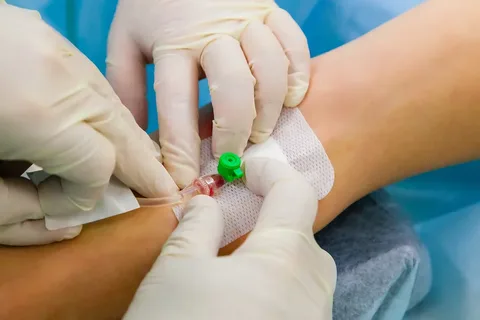
Treatment of arterial blockage with peripheral catheterization
Peripheral Arterial Disease (PAD) & Arterial Blockage
Poor blood circulation or arterial blockage is a serious condition, as proper organ function depends on adequate blood supply delivered by arteries.
How Does Arterial Blockage Occur?
It starts with:
-
Hardening of arterial walls (atherosclerosis)
Then progresses to:
-
Narrowing of arteries
-
Complete blockage in advanced cases
The Risk Triangle
Main contributing factors:
-
High blood pressure
-
Diabetes
-
Smoking
Early Warning Signs
The body gives early alerts such as:
-
Leg pain أثناء walking long distances (similar to muscle cramps)
-
Pain disappears with rest and returns with walking
Progression of Symptoms
-
Pain occurs after shorter walking distances
-
Longer rest periods are needed
-
In advanced stages, pain persists حتى أثناء الراحة
This indicates severely reduced blood flow.
When Does It Become Dangerous?
The condition becomes critical when:
-
Wounds or injuries occur in the limbs
-
Healing is delayed
This may lead to:
Gangrene (tissue death)
A serious condition requiring urgent medical intervention.
Treatment Options
Peripheral Catheterization (Modern Treatment)
A safe and effective minimally invasive option:
-
Small skin entry point
-
Local anesthesia
-
Lower risk compared to surgery
Procedure includes:
-
Inserting a thin catheter into the artery
-
Balloon angioplasty to widen the artery
-
Stent placement if needed
-
Advanced techniques to dissolve or remove clots
Patient’s Role in Treatment
Successful outcomes depend on:
-
Complete smoking cessation
-
Regular walking/exercise
-
Adherence to blood-thinning medications
-
Healthy diet
Key Takeaway
Arterial blockage is progressive but treatable—especially when detected early.
Early action can prevent serious complications like gangrene and amputation.
Contact Us