
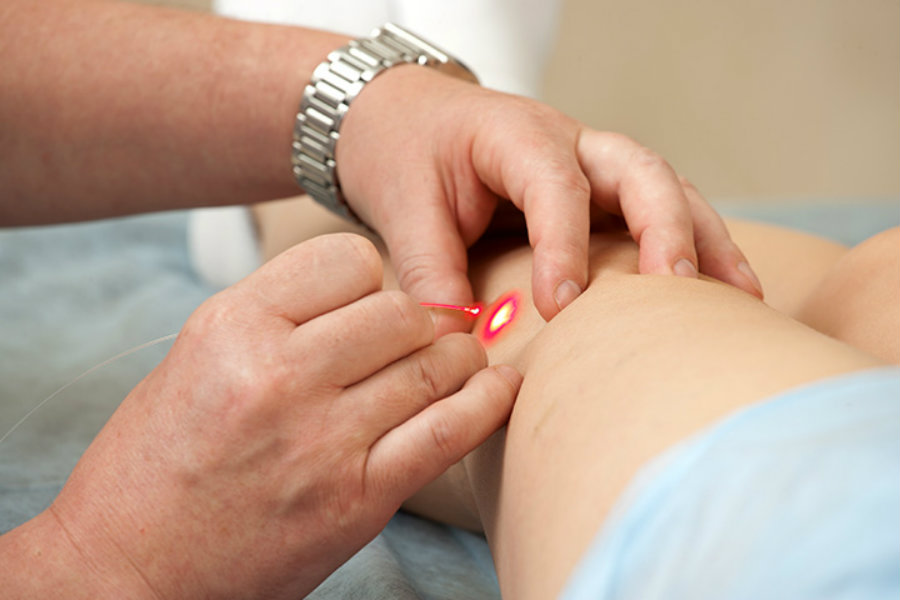
Laser treatment for varicose veins
What are Varicose Veins?
Varicose veins are enlarged and twisted veins, commonly in the legs, caused by faulty vein valves that allow blood to flow backward and pool, increasing venous pressure.
Types of Varicose Veins
1. Primary Varicose Veins
Caused by weakness or failure of superficial vein valves, leading to:
-
Blood pooling inside veins
-
Increased venous pressure
-
Vein enlargement and bulging
Symptoms:
-
Leg pain or heaviness
-
Swelling, especially around the ankle
-
Itching
-
Skin discoloration (hyperpigmentation)
-
Superficial thrombophlebitis
-
Venous ulcers in advanced cases
2. Secondary Varicose Veins
Develop due to damage in deep veins after previous blood clots, leading to:
-
Damaged deep vein valves
-
Increased deep venous pressure
-
Transmission of pressure to superficial veins
Symptoms:
Similar to primary type but usually more severe.
When do symptoms appear?
-
Symptoms worsen after prolonged standing or sitting
-
Commonly felt in the lower leg around the ankle
-
Improve with rest and leg elevation
Importance of Diagnosis
Treatment is not only cosmetic—it requires:
-
Assessment of vein function
-
Detection of valve reflux
-
Proper grading of the condition
Treatment Options
1. Conservative Treatment:
-
Walking or exercise for 30 minutes daily
-
Adequate hydration
-
Healthy diet
-
Medications to improve vein function
-
Compression stockings
2. Vein Treatment Sessions:
-
Foam sclerotherapy
-
Laser sessions
-
Advanced techniques like CLaCS
3. Endovenous Catheter Treatment:
A safe and minimally invasive procedure using a very small entry point to insert a catheter and completely close the damaged vein.
Key Takeaway
Varicose vein treatment is not only cosmetic—it is essential for maintaining vein health and preventing complications.